
Of all the seasons, autumn is arguably the most spectacular in the New Forest woodlands.
The summer’s lush green canopy gradually turns to dazzling shades of gold, orange, brown and red. The trees prepare to shut down for winter, but not before one of nature’s most colourful shows.
The long hot summer of 2026 has had an impact on forests across the country.
According to the Woodland Trust, periods of drought can cause serious problems for trees, with the sugars in leaves becoming concentrated and the production of anthocyanin (red and pink colour pigments) increasing.
Consequently, the leaves turn red or brown, and a tree may shed them completely to preserve the moisture in its branches and trunk, giving the impression of a very early autumn – a so-called false autumn.
Forestry England said it was important not to confuse signs of stress in individual trees with the full arrival of autumn.
Andrew Smith, Director at Forestry England’s National Arboretum said: “If we have some spells of rain in the coming weeks and continue to experience above average temperatures, the climate will be ideal for maintaining sugar levels. This means that the leaves will stay attached to trees for longer and will have time to develop their autumnal shades.
“The length of display relies heavily on the weather throughout autumn. If it continues to be mild the leaves will have time for the build-up of chlorophyll to entirely fade and their dormant pigments to fully take over.”
Autumn in the forest
There is a timeless pleasure in walking through woods surrounded by a blaze of colour, illuminated by autumn sunshine and with the crunch of fallen leaves underfoot.
Kids can enjoy the fun of playing in the leaves and hunting for conkers under the chestnut trees. They can also try and identify the various species of leaves fallen from the trees as well as looking out for blackberries to pick.
It’s the season of bounty in the forest – look out for rosehips and sloes as well as the twisted crab apple trees which spill their bitter fruit on the ground at this time of year.
There is always the chance of seeing pigs which have been sent out on to the open forest during the annual pannage season. The 2026 pannage season runs from 14 September.
Commoners with the right of pannage let the pigs loose to snuffle for fallen acorns and beech mast which are poisonous to ponies.
Many rare species of fungi also emerge as the air of damp and decay descends on the forest. The New Forest is home to an estimated 2,700 species of fungi, with new ones still being discovered. They include some considered to be of international importance.
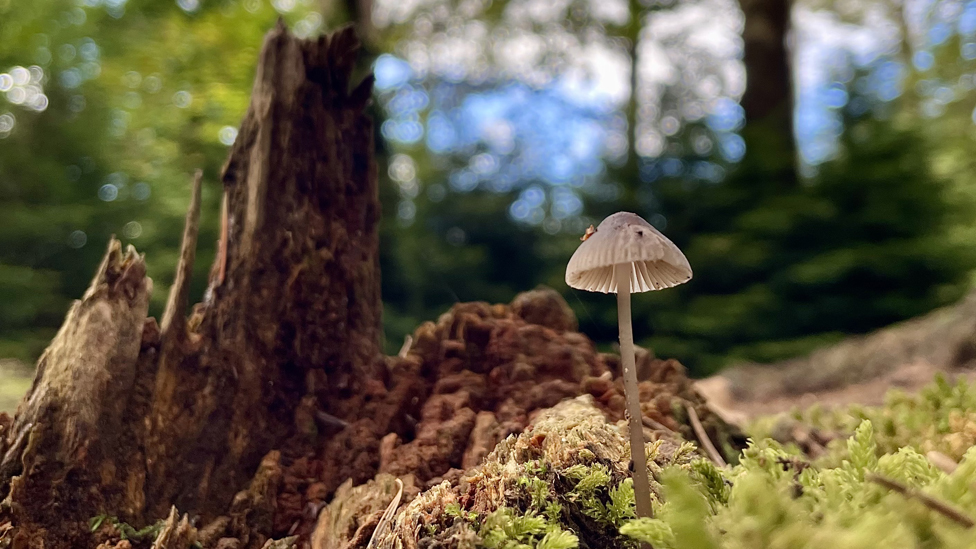
Look out for fungi on the forest floor or growing on decaying logs or fallen trees. Evocative names like bearded tooth, chicken of the woods or devil’s fingers reflect their strange, alien-like appearance. There is a ‘look but don’t pick‘ rule in the forest to protect its sensitive fungi.
To learn more, Wild New Forest also offer guided Fungi Explorer walks at various sites.
Autumn is also deer rutting season. The sound of stamping, primeval roars and the clashing of antlers echo through the forest inclosures.
Stags are pumped full of testosterone and show off to the females as they fight other males for dominance in their territory.
Rival males will lock antlers and battle for superiority and the right to mate with all the females in the ‘harem’. It is important not to disturb the deer during this time and to respect deer conservation zones.
Top places for autumn walks
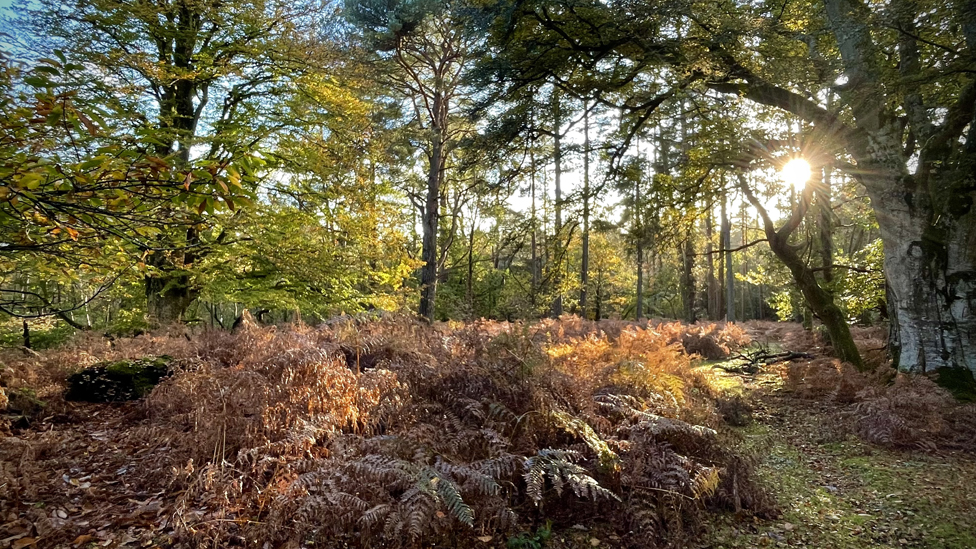
Some of our favourite autumn walks take in the New Forest’s ancient and ornamental woodlands which are always breathtaking at this time of year.
1. View two of the forest’s most majestic trees – the Knightwood Oak and Eagle Oak – on a walk through Knightwood and Anderwood inclosures. Or a longer loop through Anderwood is also spectacular in autumn.
2. Coppice of Linwood is a golden delight as the leaves drop each year. Extend this three-mile walk and continue through Kings Garn Gutter Inclosure by joining on to our Janesmoor Pond route.
3. To explore the magnificent woods between Lyndhurst and Brockenhurst, join the Aldridgehill route to explore the woods of New Park Plantation. Meanwhile the Lyndhurst-Brockenhurst loop also takes you along Beechen Lane outside Lyndhurst – another sensational cascade of autumn colour.
4. Acres Down affords wonderful views of the forest landscapes. Try walking from Millyford Bridge or Bolderwood. Alternatively, enjoy a shorter walk from Acres Down through the tranquil woodlands of Puckpits Inclosure. Further north, you can enjoy the autumn colours of Godshill Wood.
5. Walking through Blackwater Arboretum at Rhinefield, you can experience autumn from around the world, with its international collection of trees, as well as enjoying the sensory sculpture trail.