The New Forest has a tradition of worship dating back hundreds of years, with churches and old graveyards offering a glimpse into the heritage and character of this unique landscape.
Some churches are located in the heart of villages, while others appear almost unexpectedly, tucked away among the lanes, trees and fields.
They stand as a record of the people who have lived and worshiped in forest communities over the centuries
These forest treasures make excellent places to pause, explore the local history and enjoy the tranquil atmosphere before continuing on a walk.
St Nicholas Church, Brockenhurst
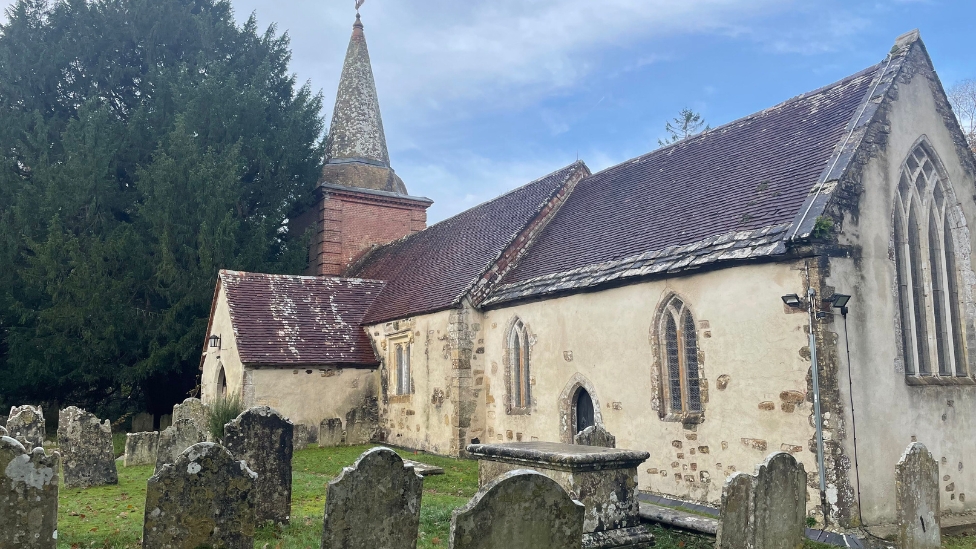
The Church of St Nicholas can be found on Church Lane at the top of a hill, a quarter of a mile south-east of the Brockenhurst railway crossing.
There has been a church on this site dating back to Saxon times, and possibly a pagan temple or a Romano-British church previous to that.
The church is believed to be the oldest in the New Forest and was mentioned in the Doomsday Book, as part of the village of Broceste, as it was then known.
A giant yew tree has engulfed the south west side of the church. Some of the branches reach out a distance of some 30ft. It was carbon dated in the mid-1980s and found to be more than 1,000 years old.
The neighbouring cemetery includes the graves of more than 100 New Zealand, Indian and other soldiers who died in the military hospitals in Brockenhurst during World War 1.
The original white wooden crosses were replaced in 1924 by engraved head-stones, and the large memorial cross was erected in 1927.
An annual ANZAC memorial service is held at the church, attended by representatives of the New Zealand High Commission and the New Zealand Forces.
The cemetery also contains the grave of a New Forest folk hero – Harry ‘Brusher’ Mills, the snake catcher.
Brusher lived in an old charcoal burner’s hut in woodlands near Sporelake Lawn, near Brockenhurst. Using a forked stick and a sack, he caught thousands of grass snakes and adders.
Some were sent to London Zoo as food for the birds of prey and others were used to make ointments for snake bites and other ailments which were sold to fascinated Victorian visitors from London.
After his death, village residents paid for the marble headstone you can seen in the graveyard.
The church is on the route of.a circular walk from Brockenhurst to Roydon Woods.
St Mary’s Chapel, Buckler’s Hard

Although not instantly recognisable as a church, St Mary’s Chapel sits in the middle of Buckler’s Hard’s west row of terraced houses.
Number 82 is actually a chapel with 40 seats which has held regular services since 1880.
The wooden paneling behind the altar comes from ships that were built in the village during the 18th Century.
The chapel also has a memorial to Sir Francis Chichester who famously returned to Buckler’s Hard on board his yacht, Gypsy Moth IV, in September 1967, having become the first person to single-handedly circumnavigate the globe.
Visit the chapel on a walk to Buckler’s Hard along the Beaulieu River.
The Canadian Memorial
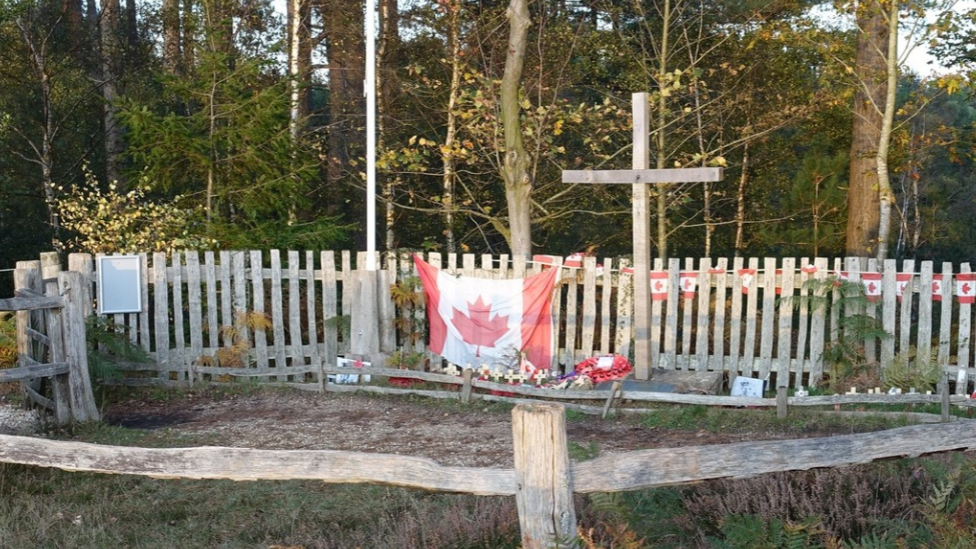
Not a church in the conventional sense, the Canadian Memorial at Bolderwood marks the site where Canadian soldiers gathered for services when they were stationed in the New Forest during World War 2.
The wooden cross was originally erected in April 1944 by men of the Royal Canadian Army Service Corp. They were attached to the Canadian 3rd Infantry Division, and went on to land on Juno Beach, Normandy on D-Day.
The site near Mogshade Hill made a scenic place for open-air services attended by Canadians of all denominations, with views over the hills and nearby Highland Water.
A plaque reads: “On this site a cross was erected to the glory of God on 14th April 1944, by men of the 3rd Canadian Division RCASC’ – the Royal Canadian Army Service Corps.”
Visit the memorial at the start of the Canadian Memorial walk on paths alongside the Highland Water.
Fritham

The red-brick Free Church in Fritham was built in 1904 when the village was home to the Schultze Gunpowder Company’s factory and had experienced a surge in its population.
The church replaced a ‘tin tabernacle’ which had previously been built by the company.
At that time the congregation was described as consisting largely of employees from the gunpowder works and agricultural workers from the surrounding area. The wide range of denominations among the population meant it was known as Fritham United Free church.
The church has a memorial plaque to three bothers who died on board the Titanic when it sank on its maiden voyage from Southampton in April 1912.
Leonard, Lewis, and Stanley Hickman were second class passengers on the stricken liner and they died along with their travelling companion Percy Deacon, also from Fritham.
According to Titanic historians, Leonard had emigrated to Canada but had returned home to Fritham for Christmas in 1911. He was travelling back on the Titanic’s ill-fated maiden voyage from Southampton with two of his brothers, having persuaded them to move to Canada as well.
The church is a short distance from the start of a woodland walk from Fritham car park.
St Michael and All Angels
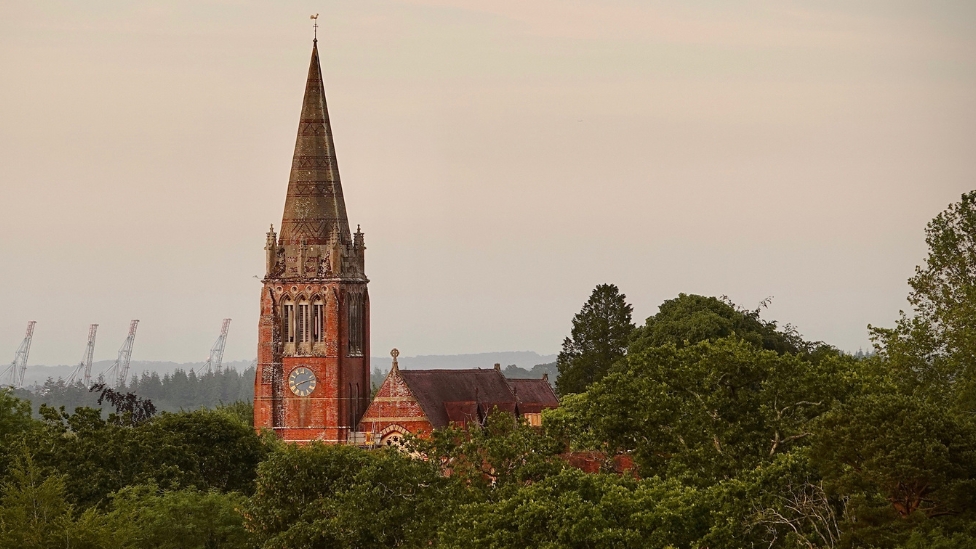
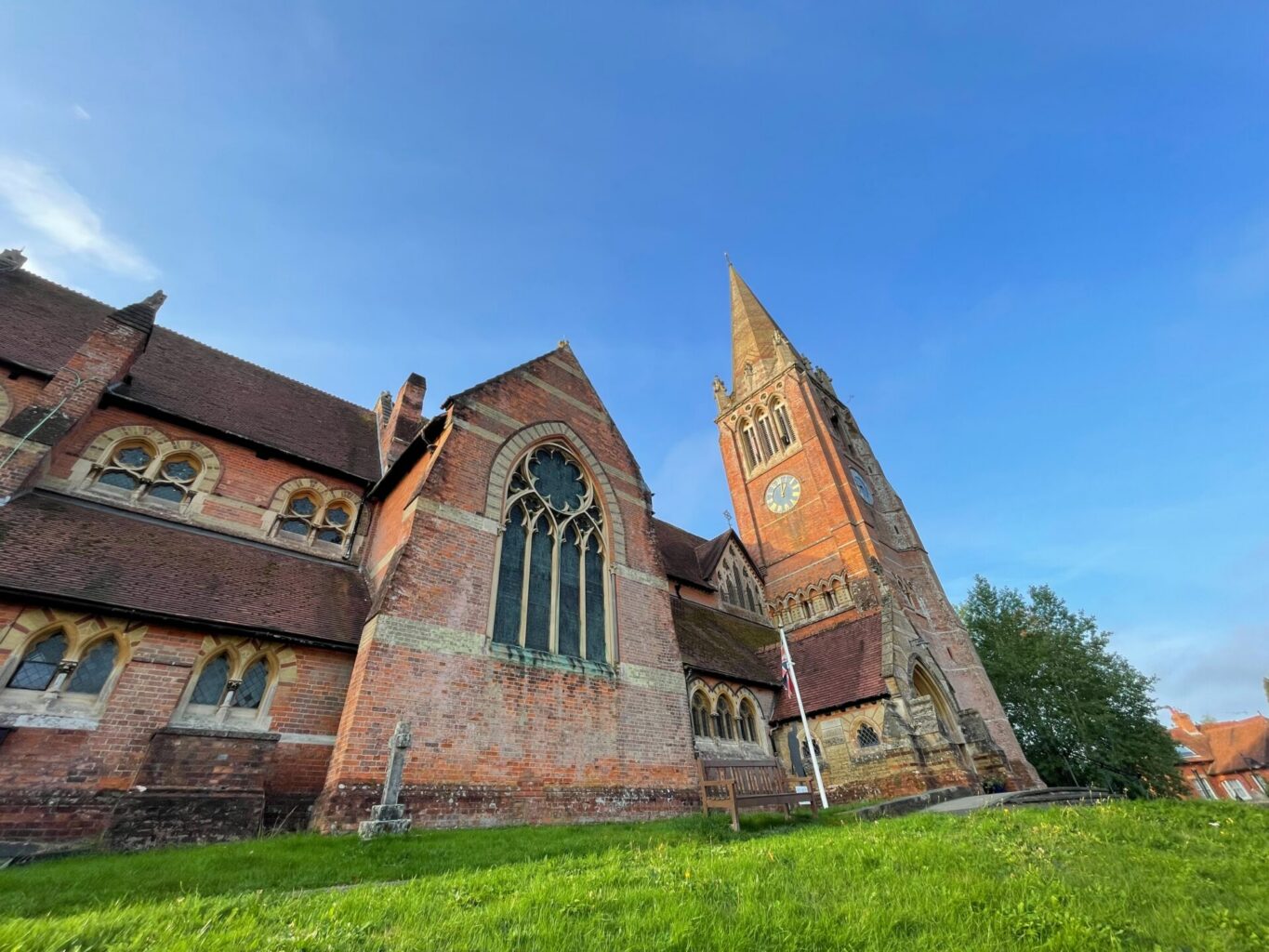
The spire of St Michael and All Angels dominates the skyline of Lyndhurst. The Victorian parish church was built on the site of a Georgian church constructed in the 1740s.
An archeological dig in 2012 found evidence of religious activity on the site dating back to medieval times. Records showed there was a royal hunting lodge on the site of the current King’s House, adjacent to the church, which had a chapel attached.
If the church is open, you can see the impressive stained-glass windows and the lavish fresco of the parable of the Wise and the Foolish Virgins behind the altar.
It was created by Victorian artist Frederic Leighton who was staying with his mother in Lyndhurst at the time the church was being built. Local girls from the village reputedly acted as models for the figures.
Around the back of the church is the grave of Alice Liddell – the inspiration for Alice in Wonderland. A family friend, Charles Dodgson, later known as Lewis Carroll, made up his fantastical stories to entertain four-year-old Alice and her sisters on a boat outing in 1862 and they formed the basis for Alice’s Adventures Under Ground.
The Alice in Wonderland books went on to become among the most popular children’s stories ever written.
Visit the church and discover more about the history of the village on the Lyndhurst Explorer walk.